A blank wall has more potential than most homeowners realize. With the right design, it can become a stunning focal point filled with storage, display space, and character. That’s exactly why diy built ins have become one of the most popular home improvement projects in recent years.
Whether you’re creating a reading nook, adding storage around a television, or designing floor-to-ceiling shelving, built-in furniture can completely transform the look and functionality of a room. Unlike freestanding furniture, built-ins maximize every inch of available space while creating a seamless, custom appearance.
The best part? You don’t need a professional carpenter to achieve impressive results. With careful planning, the right materials, and a bit of patience, homeowners can build beautiful built-ins that look like they were installed by a custom millwork company.
Why Built-Ins Are Worth the Investment
Built-ins offer much more than visual appeal. They solve storage problems, increase organization, and create architectural interest that standard furniture often cannot match.
Some of the biggest benefits include:
- Better use of wall space
- Increased home value
- Custom storage solutions
- Improved room organization
- A high-end, professional appearance
- Flexible design options
Many homeowners choose diy built ins and shelving because they blend naturally into the room’s architecture. Instead of adding furniture that takes up floor space, built-ins become part of the room itself.
Understanding Different Types of DIY Built Ins
Built-In Bookshelves
One of the most common projects is creating built in bookshelves. These can range from simple wall-mounted shelving to elaborate floor-to-ceiling library walls.
Popular locations include:
- Living rooms
- Home offices
- Bedrooms
- Hallways
- Dining rooms
Built-In Cabinets
Storage-focused projects often include built in cabinets with doors, drawers, or concealed compartments.
Cabinets work especially well for:
- Electronics
- Games
- Seasonal decorations
- Office supplies
- Household items
Entertainment Centers
A diy built in entertainment center combines shelving, cabinetry, and media storage into a cohesive design.
These installations often include:
- Television mounting areas
- Hidden cable management
- Display shelving
- Lower storage cabinets
Wall Units
A complete built in wall unit transforms an entire wall into a storage and display system. These projects are ideal for family rooms and large living spaces.
Planning Your Project
Measure Carefully
Before purchasing materials, measure:
- Wall width
- Ceiling height
- Baseboard depth
- Outlet locations
- Window and door clearances
Accurate measurements are essential when learning how to build built ins successfully.
Determine Your Purpose
Ask yourself:
- Do you need storage?
- Do you want decorative shelving?
- Will the built-ins hold books?
- Are they intended for media equipment?
The answers will influence cabinet depth, shelf spacing, and overall design.
Choose a Style
Popular styles include:
- Modern
- Traditional
- Farmhouse
- Transitional
- Scandinavian
- Contemporary
A clear design direction helps create a cohesive finished product.
Materials You’ll Need
Most projects require:
- Plywood
- MDF
- Base cabinets
- Trim molding
- Wood screws
- Wood filler
- Primer
- Paint
- Shelf supports
Many homeowners save money by using diy built ins and stock cabinet components rather than building everything from scratch.
Using Stock Cabinets
One popular method involves diy built ins with stock cabinets.
Advantages include:
- Lower cost
- Faster installation
- Consistent dimensions
- Professional cabinet construction
You can often create a stunning custom appearance using stock cabinets as the foundation.
How to Build Built In Cabinets
Step 1: Create a Layout
Draw your design on paper or use design software.
Consider:
- Shelf heights
- Cabinet placement
- Symmetry
- Traffic flow
Step 2: Install Base Cabinets
Secure the cabinets to wall studs and ensure they are perfectly level.
Step 3: Build Vertical Supports
Attach side panels that extend upward from the cabinet tops.
Step 4: Add Shelves
Install adjustable or fixed shelves depending on your storage needs.
Step 5: Attach Trim
Trim pieces create the illusion that the structure was built with the house.
Step 6: Fill and Sand
Smooth every seam before painting.
Step 7: Paint and Finish
Most homeowners choose white, but dark colors and natural wood finishes are becoming increasingly popular.
DIY Built In Bookshelves With Cabinets
Combining shelving and storage is one of the most practical approaches to built-in design.
A diy built in bookshelves with cabinets project typically includes:
- Lower storage cabinets
- Open display shelves
- Decorative trim
- Crown molding
This arrangement offers the perfect balance between display space and concealed storage.
Ideal Shelf Depth
General recommendations:
- Bookshelves: 10–12 inches
- Decorative shelving: 8–10 inches
- Media shelving: 14–18 inches
Proper depth prevents wasted space while maintaining functionality.
DIY Living Room Built Ins
The living room remains the most popular location for built-ins.
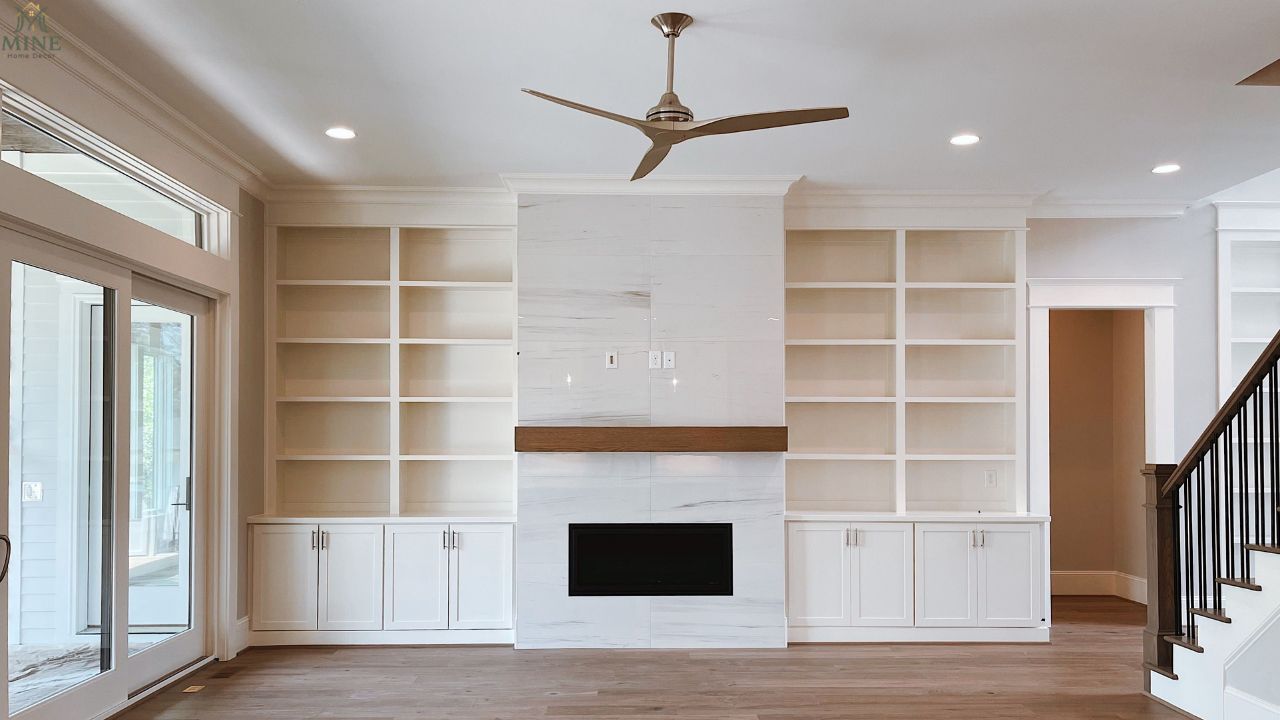
Around a Fireplace
Fireplace built-ins create a balanced focal point.
Features often include:
- Matching cabinets
- Floating shelves
- Decorative lighting
- Display niches
Around a Television
Many homeowners build built in bookshelves with tv layouts that combine media storage with decorative shelving.
Benefits include:
- Reduced clutter
- Hidden wires
- Better organization
- Custom appearance
Full Wall Installations
Complete wall units can dramatically increase storage while creating a luxurious custom look.
DIY Built In Office Cabinets
Home offices benefit tremendously from built-in storage.
Advantages include:
- Improved organization
- Dedicated workspace
- Professional appearance
- Better use of vertical space
A well-designed diy built in office cabinets project can include filing drawers, printer storage, display shelving, and integrated desks.
Building Built In Shelves
If cabinetry feels overwhelming, shelves alone can be a great starting point.
Floating Shelves
Minimalist floating shelves create a clean, modern appearance.
Fixed Shelves
Fixed shelves provide greater strength and support for heavy books.
Adjustable Shelves
Adjustable systems allow flexibility as storage needs change.
Learning how to build diy built ins is often easier than constructing full cabinetry.
Choosing the Best Materials
Plywood
Pros:
- Strong
- Durable
- Stable
Cons:
- Higher cost
MDF
Pros:
- Smooth finish
- Affordable
- Easy to paint
Cons:
- Heavy
- Less moisture resistant
Solid Wood
Pros:
- Premium appearance
- Long-lasting
Cons:
- Expensive
- Potential movement over time
Custom Built Ins vs. Prefab Solutions
Many homeowners debate between custom built ins and prefabricated products.
Custom Built Ins
Advantages:
- Perfect fit
- Unlimited design flexibility
- High-end appearance
Disadvantages:
- More labor
- Higher material costs
Prefab Options
Advantages:
- Faster installation
- Lower cost
- Easier planning
Disadvantages:
- Limited customization
For many projects, combining stock cabinets with custom trim delivers the best balance of value and appearance.
Common Mistakes to Avoid
Ignoring Stud Locations
Always anchor large units into wall studs.
Skipping Level Checks
Small leveling errors become obvious once shelves are installed.
Underestimating Storage Needs
Build for future needs, not just current requirements.
Poor Trim Work
Trim is what makes built-ins look professional.
Rushing Paint Preparation
Proper sanding and priming create a furniture-grade finish.
Styling Built In Shelves and Cabinets
After construction comes decorating.
Popular styling elements include:
- Books
- Plants
- Artwork
- Decorative bowls
- Picture frames
- Sculptural objects
Aim for balance rather than symmetry.
Mix:
- Vertical and horizontal books
- Different textures
- Various heights
- Open and filled spaces
The goal is a curated appearance rather than a cluttered display.
Cost Breakdown
Typical project costs vary significantly.
Basic shelving:
$200–$600
Stock-cabinet built-ins:
$800–$2,500
Large custom wall units:
$2,500–$10,000+
DIY projects often save thousands compared to hiring professional cabinetmakers.
Maintenance Tips
Keep built-ins looking their best by:
- Dusting regularly
- Tightening hardware annually
- Touching up paint when needed
- Avoiding excess moisture
- Checking shelf supports periodically
Proper maintenance ensures your investment lasts for decades.
FAQ
How much do DIY built ins cost?
Most projects range from a few hundred dollars to several thousand, depending on size, materials, and complexity.
Are built-ins difficult to build?
Basic shelving projects are beginner-friendly, while large cabinetry installations require intermediate woodworking skills.
What is the best wood for built-ins?
Plywood is often considered the best combination of strength, durability, and cost-effectiveness.
Can I use stock cabinets for built-ins?
Yes. Many successful projects use stock cabinets as a foundation before adding custom trim and shelving.
Do built-ins increase home value?
Quality built-ins can improve functionality and visual appeal, which may positively influence buyer perception.
What depth should built-in bookshelves be?
Most bookshelves perform well at 10–12 inches deep, although larger decorative shelves may require additional depth.
Should built-ins match existing trim?
In most homes, matching trim and molding creates a more cohesive appearance.
Can beginners build built-ins?
Yes. Starting with simple shelving projects allows beginners to gain skills before tackling larger cabinet installations.
Final Thoughts
Well-designed diy built ins offer one of the most rewarding upgrades a homeowner can make. They combine beauty, functionality, storage, and customization in a way that freestanding furniture rarely achieves. Whether you’re creating elegant bookshelves, practical cabinets, or a full entertainment wall, the right built-in design can completely transform your space.
By carefully planning your layout, choosing quality materials, and paying attention to finishing details, you can create professional-looking built-ins that serve your family for years to come. From simple shelving to full wall units, every project is an opportunity to turn unused wall space into something both beautiful and useful.